Let’s start with a bitter truth.
Most pitch deck feedback is useless.
Not because people are stupid.
Not because founders are lazy.
Because most feedback is designed to be polite.
Not useful.
A founder shares a deck.
Someone says:
“Looks good.”
“Interesting market.”
“Maybe tighten the story.”
“Add more traction.”
This is not real feedback.
This is social protection.
Nobody wants to say the one sentence that actually matters:
This deck will not get funded.
So weak decks stay alive too long.
Founders keep polishing.
Keep pitching.
Keep wasting months.
Then they blame the market.
Or timing.
Or investor sentiment.
Sometimes the problem is much simpler.
The deck was never judged hard enough.
That is why we built 2080 Unity Deck Analyzer.
Not to make founders feel better.
Not to generate generic advice.
Not to do startup theater.
To pressure-test the deck.
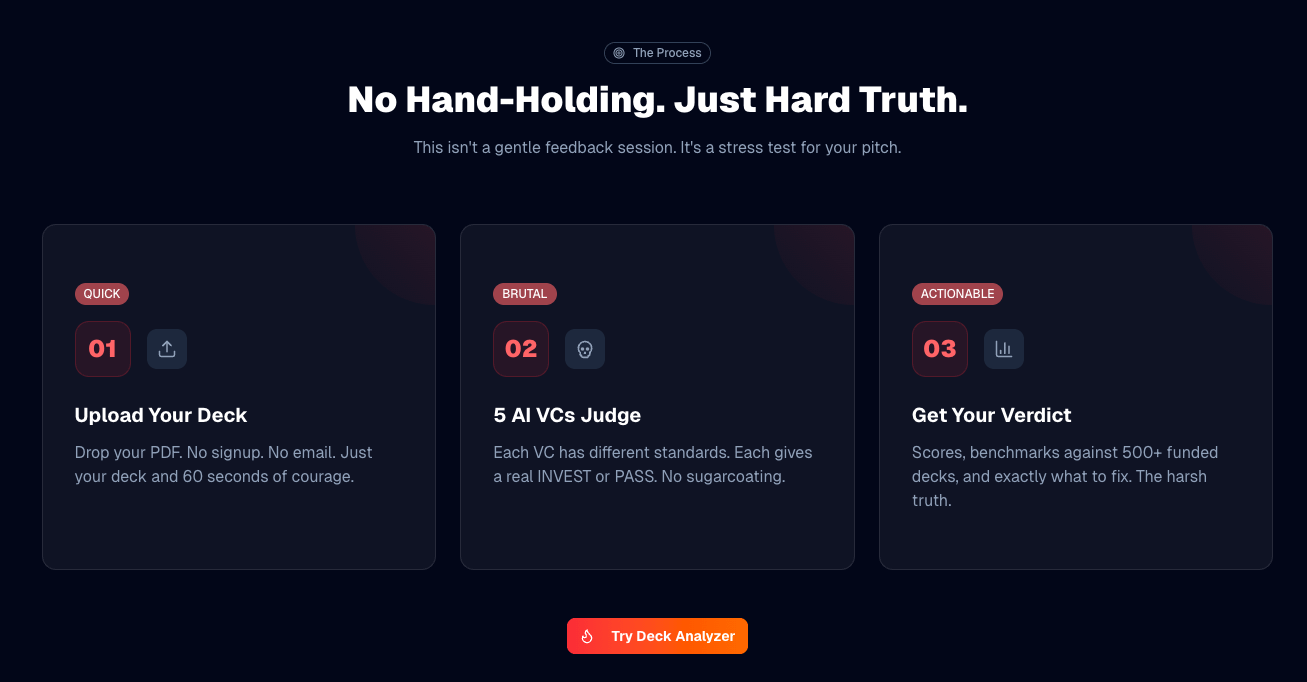
You upload a PDF.
Five AI VC personas review it.
Each one gives a real INVEST or PASS decision.
No signup required.
About 60 seconds to verdict.
Completely free.
This matters because investors do not read decks with one logic.
An angel looks for trust.
A seed VC looks for signal.
A Series A investor looks for scale.
A corporate VC looks for validation.
A global VC looks for transferability.
Same deck.
Different standards.
Different reasons to fail.
That is much closer to reality than one generic score.
On the upload page, each judge even has a different bar:
Sprout 60+
Magnifier 65+
Rocket 75+
Tower 70+
Globe 75+
This is exactly what founders usually miss.
A deck can sound fine in a friendly room
and still die in a real fundraising process.
A deck can be “interesting”
and still create zero conviction.
A deck can have traction
and still fail because the problem is vague.
A deck can have a product
and still fail because the team slide creates no trust.
A deck can have a market story
and still fail because the ask is weak.
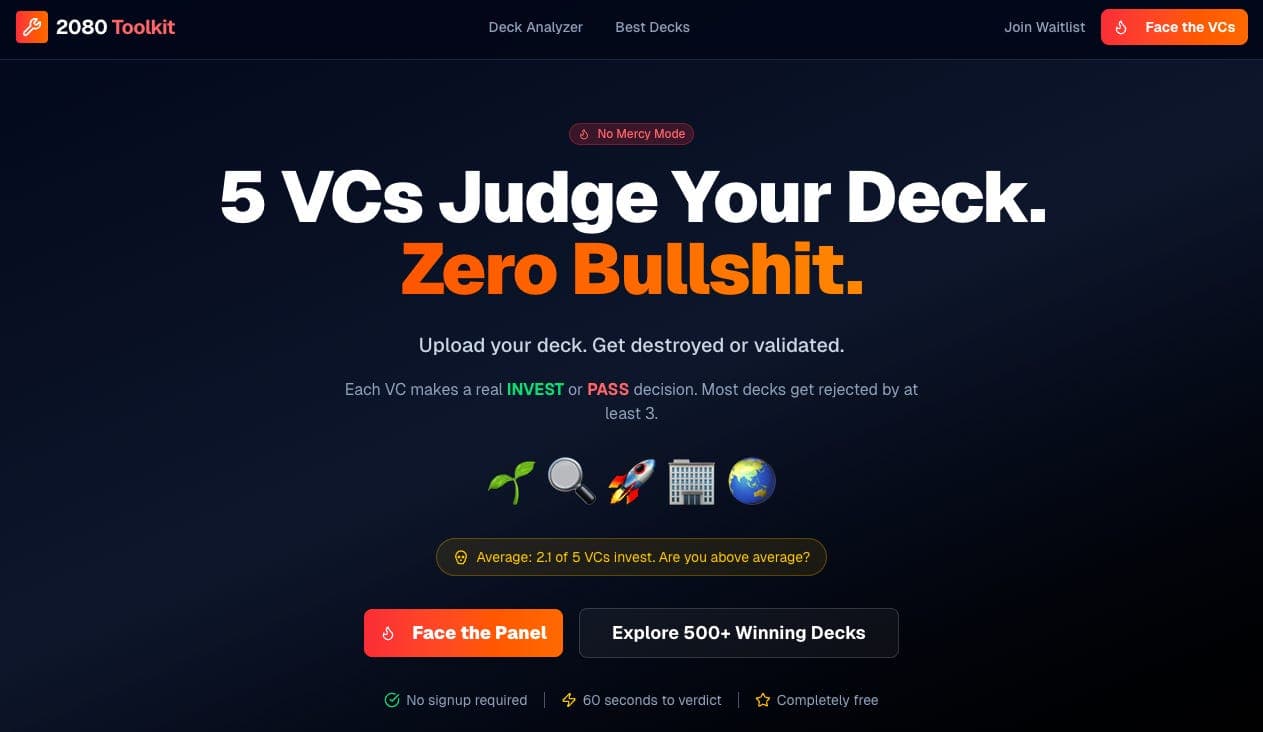
The homepage of 2080 Unity makes this point in a blunt way:
No Mercy Mode.
No Hand-Holding. Just Hard Truth.
5 VCs Judge Your Deck. Zero Bullshit.
Good.
That tone is correct.
Because false confidence is expensive.
Late rejection is expensive.
A bad investor meeting is expensive.
Three months of the wrong story is expensive.
A weak process with the wrong deck is expensive.
Earlier rejection is much cheaper.
And the benchmark is not random.
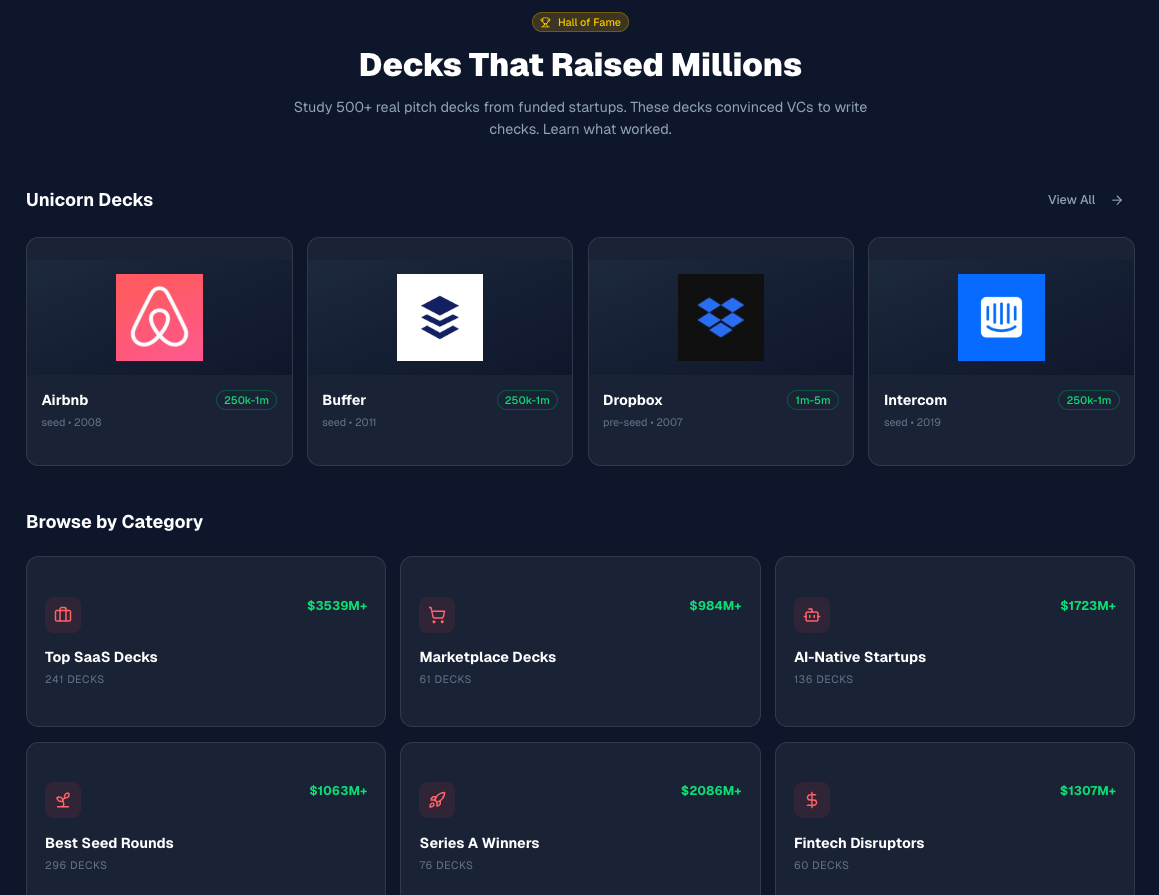
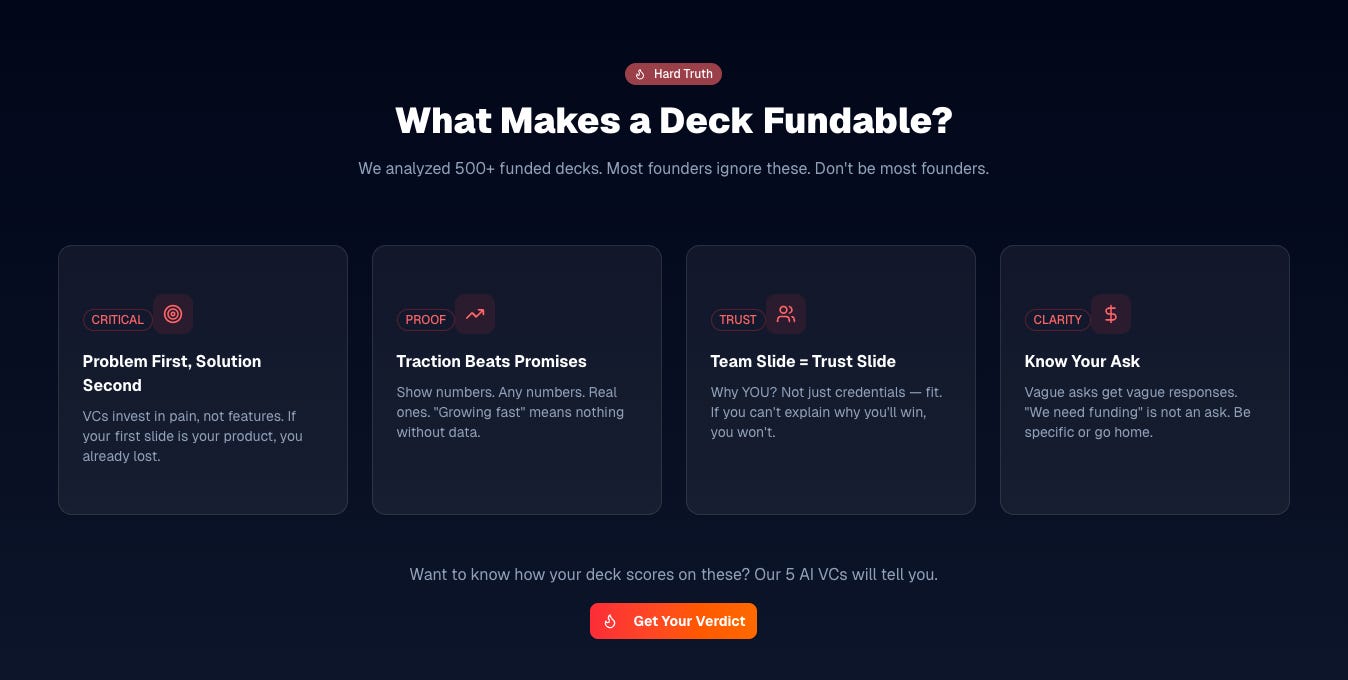
The site says users get scores, fixes, and comparison against 500+ funded decks. It also highlights four basic points most founders still mess up:
Problem first, solution second
Traction beats promises
Team slide = trust slide
Know your ask
That is not motivational advice.
That is what usually separates
“interesting company”
from
“let’s move this forward.”
The current numbers also tell a very honest story.
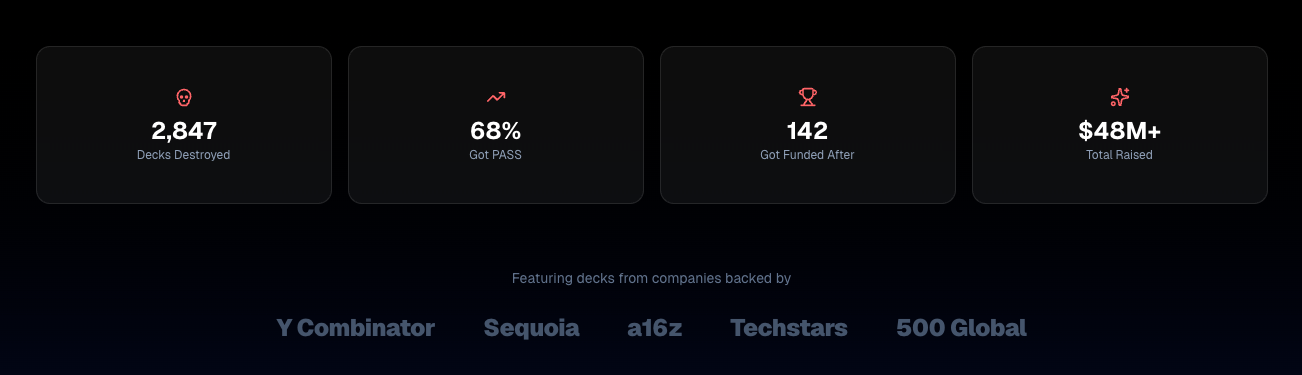
According to the site, 2,847 decks have already been analyzed.
68% got PASS.
Average result is only 2.1 of 5 VCs invest.
The site also says 142 got funded after and $48M+ total raised.
To me, that is the right signal.
Not fake positivity.
Not inflated success stories.
A real filter.
Because if five investor lenses cannot find conviction,
the market probably will not either.
Founders do not need more pitch deck feedback.
They need answers to harder questions:
Would anyone actually invest?
Which investor lens rejects this first?
Is the problem weak, or the trust slide?
Is the ask unclear, or the market too small?
What breaks first under pressure?
That is the job.
If the deck survives, good.
You are more fundable.
If it breaks, even better.
Now you know where.
Before the real meeting.
Before the real damage.
If you want polite comments, ask a friend.
If you want a verdict, use 2080 Unity Deck Analyzer.
Try it here:
https://app.2080unity.com/deck